
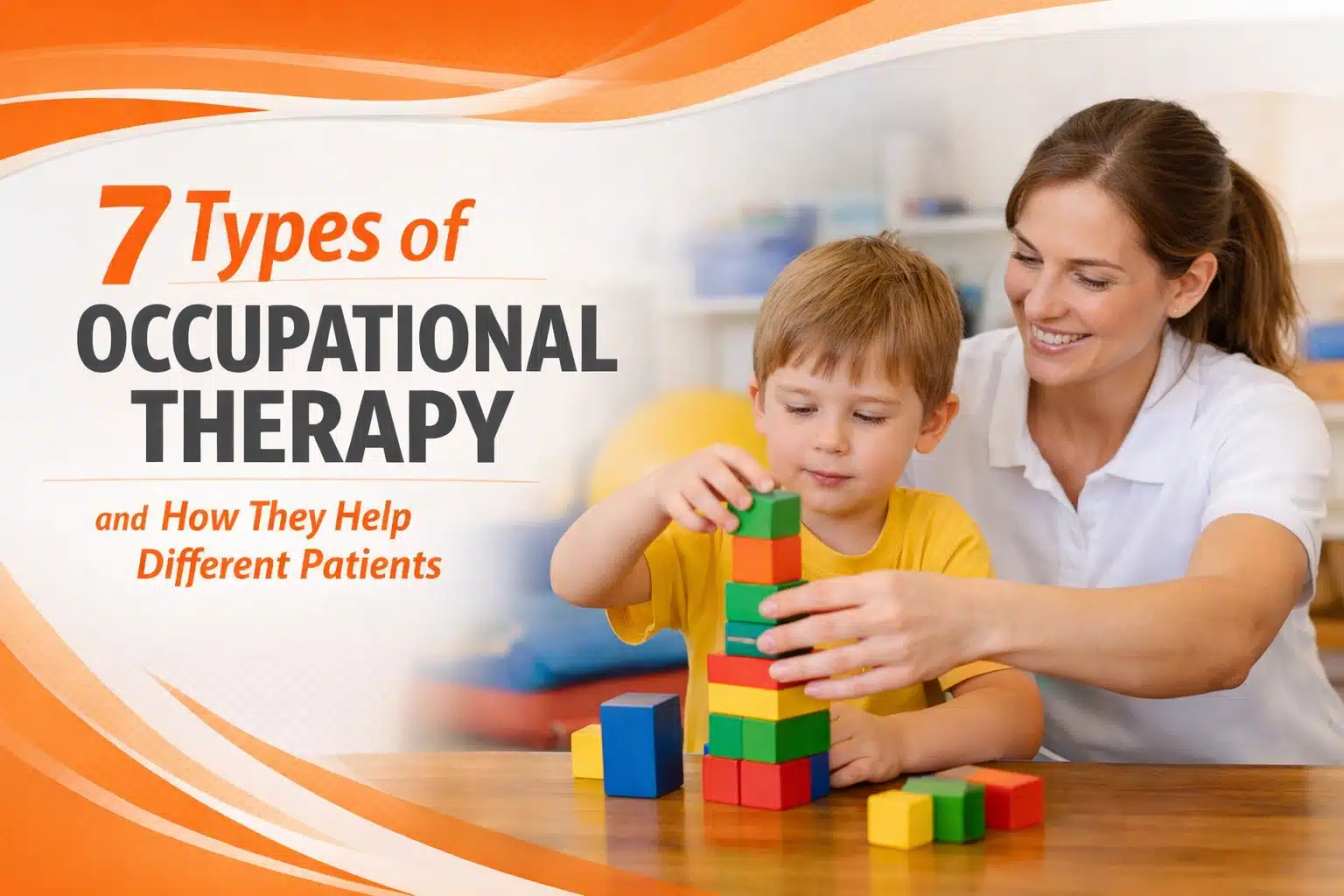
Most people hear ‘occupational therapy’ and picture someone teaching an elderly person to button their shirt. That is
part of it — but only a tiny part.
Occupational therapy provides services to three distinct groups of patients, which cover multiple medical conditions
and various treatment objectives. A premature baby in the NICU, a teenager with autism, a working professional
recovering from a hand injury, a stroke survivor learning to walk again — all of them may need occupational therapy,
but each needs a completely different type.
Occupational therapy focuses on the primary activities of daily living, which 26 million people with disabilities in
India, according to the Rehabilitation Council of India (RCI) 2022 report, face as their main challenge.
This guide explains each OT type clearly — what it is, who it helps, and what it does.
What Is Occupational Therapy?
Many people wonder why it is called ‘occupational’ therapy. It has nothing to do with careers or jobs.
In therapy terms, an ‘occupation’ means any activity that is meaningful to a person and fills their daily
life — sleeping, eating, studying, working, playing, or caring for themselves.
Occupational therapy helps people perform
these
activities as independently as possible, regardless of the physical, cognitive, emotional, or developmental
challenge
they are facing.
So in simple terms, we can say OT makes daily life possible for people who are struggling to manage it.
7 Types of Occupational Therapy with Their Benefits
Here are the 7 main occupational therapy types — what each one does and who it is designed for.
1. Paediatric Occupational Therapy

This is one of the most common types of OT in India. It focuses on children — from newborns to teenagers — who have
developmental, physical, sensory, or learning challenges that affect their daily functioning.
Best for: Infants, toddlers, and children with autism, cerebral palsy, ADHD, developmental delays, sensory
processing difficulties, or learning differences.
How it helps:
- The program develops fine motor abilities through activities, which include pencil grip and
button fastening, and scissor operation. - This therapy also develops sensory processing abilities through its activities, which assist
children who experience either excessive or insufficient sensitivity to touch, sound and movement. - Help in the development of handwriting skills, which prepare them for academic activities.
- This therapy is designed to teach students self-care abilities, which include their capacity to
eat, dress and use the bathroom without assistance. - The program helps students develop their social abilities and their capacity to play with others.
2. Neurological Occupational Therapy
When the brain or nervous system is affected — through stroke, injury, or a neurological condition — everyday tasks
that
were once automatic can become difficult or impossible. Neurological
OT works to rebuild these abilities.
Best for: Adults and older patients recovering from stroke, traumatic brain injury (TBI), Parkinson’s disease,
multiple sclerosis, or other neurological conditions.
How it helps:
- Retrains the brain to perform motor tasks through repetition and neuroplasticity techniques
- Improves hand and arm function after stroke or injury
- Helps with cognitive challenges — memory, attention, and problem-solving
- Supports return to daily activities — cooking, driving, managing money
- Reduces dependence on caregivers for daily living tasks
Start Your Occupational Therapy Journey Today
If you or a loved one is looking for professional occupational therapy,
visit us at any of our specialised
centres in
Bharuch,
Vadodara,
Alkapuri,
Godhra,
Jodhpur & Anand.
Ready to start your journey toward independence? Book an appointment with an RDCC specialist today.
3. Mental Health Occupational Therapy
Mental health conditions can make it extremely difficult to manage daily life — working, maintaining a home, keeping
relationships, or even getting out of bed. Mental health
OT
addresses these functional impacts directly.
Best for: Patients living with depression, anxiety, schizophrenia, bipolar disorder, PTSD, or other psychiatric
conditions affecting their daily functioning.
How it helps:
- Builds structure and routine into daily life
- Teaches coping strategies for stress, anxiety, and emotional regulation
- Supports return to work or study after a mental health episode
- Improves social participation and community engagement
- Develops practical life skills — budgeting, cooking, managing appointments
4. Physical Rehabilitation Occupational Therapy
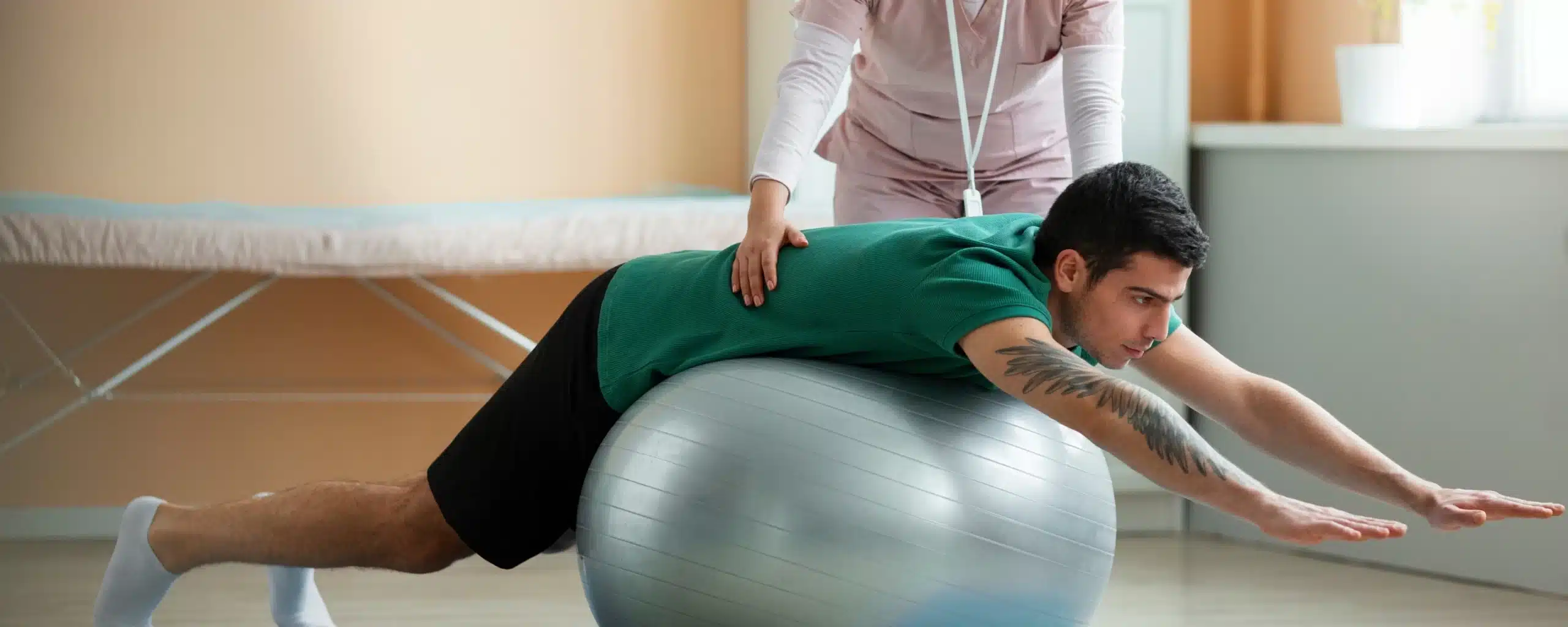
After an injury, surgery, or illness that affects physical ability, a person needs to relearn how to use their body
safely and effectively for everyday tasks. Physical
rehabilitation
OT bridges the gap between medical treatment and real life.
Best for: Patients recovering from orthopaedic surgery, fractures, hand or upper limb injuries, amputations,
burns, or long-term illnesses like cancer.
How it helps:
- This therapy restores hand and arm movement abilities that are lost through injury or surgical
procedures. - The therapy helps develop adaptive devices and splinting solutions, which help patients achieve
their rehabilitation goals. - It teaches patients how to perform their daily living tasks, which include dressing and grooming
and meal preparation using assistive devices or without them. This therapy helps patients handle their pain and
exhaustion while they go through their recovery process. - It ensures safe patient transition back to work, school and social activities through its
preparation process.
5. Geriatric Occupational Therapy
As people age, everyday activities become more challenging — physically, cognitively, and socially. Geriatric OT
helps
older adults remain safe, independent, and engaged in life for as long as possible.
Best for: Older adults experiencing age-related decline, dementia, Alzheimer’s disease, Parkinson’s, or
recovering from falls and hip replacements.
How it helps:
- Assesses and improves home safety — reducing fall risk
- Maintains independence in daily self-care activities
- Provides dementia-specific strategies for caregivers and patients
- Recommends assistive devices — grab bars, special cutlery, dressing aids
- Supports cognitive functioning through structured activity programmes
| Also Read: Difference
Between Speech Therapy and Occupational Therapy
6. Sensory Integration Therapy
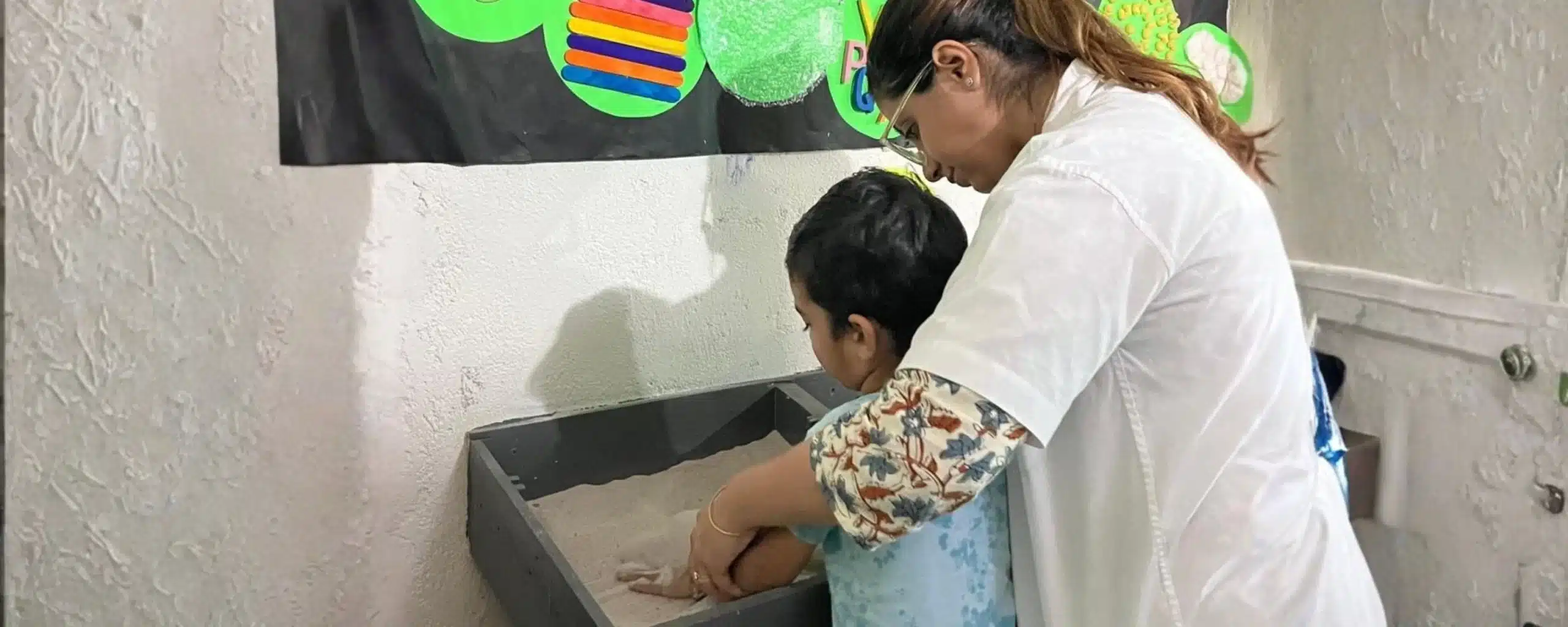
Some people — particularly children, but also adults — struggle to process sensory information from the world around
them. Everyday sensations like clothing textures, loud sounds, or bright lights feel overwhelming. Sensory
integration
therapy addresses this directly.
Best for: Children with autism spectrum disorder (ASD), sensory processing disorder (SPD), ADHD, or developmental
delays. Also used for adults with trauma-related sensory sensitivities.
How it helps:
- It develops tolerance to difficult sensory experiences through gradual training.
- The training process helps the brain develop better skills to handle and process sensory data.
- It decreases meltdown episodes, together with avoidance behaviour and sensory-related anxiety.
- It helps children develop better focus skills, together with improved attention abilities and
increased classroom involvement. - It develops confidence through controlled sensory experiences that happen in a secure, protected
space.
| Also Read: Top OT
Activities for ADHD Children (Ages 4–7) to Improve Focus & Skills
7. Vocational Rehabilitation Occupational Therapy
When a disability, injury, illness, or mental health condition prevents a person from working, vocational rehabilitation
OT helps them return to their career — or find a new one that matches their current abilities.
Best for: Working-age adults who have experienced a disabling injury, illness, or mental health condition that
has interrupted their ability to work.
How it helps:
- Assesses work-related strengths and limitations
- Modifies job tasks or recommends workplace adaptations
- Develops specific skills needed to return to the original role
- Explores alternative career options if the previous role is no longer possible
- Builds confidence and stamina for re-entering the workplace
Each of these 7 types of occupational therapy is designed to cater to the needs and treatment requirements of
patients
from each age group. Especially for the kids, where the focus is more on the use of fun activities and toys to support
occupational therapy goals and build basic skills and fine motor skills.
All 7 OT (Occupational Therapy) Types at a Glance
Use this table to quickly identify which type of OT is most relevant to your situation or your family member’s needs.
| OT Type | Best For | Key Goal |
| 1. Paediatric OT | Children with autism, delays, and sensory issues | Develop skills for school, play, and self-care |
| 2. Neurological OT | Stroke, brain injury, Parkinson’s, MS | Rebuild function lost due to neurological damage |
| 3. Mental Health OT | Depression, anxiety, schizophrenia, PTSD | Restore daily structure, work, and social functioning |
| 4. Physical Rehab OT | Post-surgery, fractures, hand injuries, and amputations | Regain physical ability for daily and work tasks |
| 5. Geriatric OT | Older adults, dementia, fall risk | Maintain independence and home safety |
| 6. Sensory Integration OT | ASD, SPD, ADHD, sensory sensitivities | Improve sensory processing and regulation |
| 7. Vocational Rehab OT | Working adults after injury or illness | Return to employment safely and successfully |
Conclusion
Occupational therapy is one of the most versatile — and most underutilised — healthcare interventions in India.
Whether
you are a parent noticing developmental differences in your child, a caregiver supporting an ageing parent, or an
adult
managing a health condition that is affecting your daily life, there is a type of OT designed specifically for your
situation.
The 7 types of occupational therapy covered in this guide are not separate disciplines — they are a connected family
of
approaches, all united by the same goal: helping people do the things that matter most to them, as independently as
possible.
At RDCC Healthcare, we provide specialised OT programs tailored to the unique needs of every patient, from
paediatrics
to geriatric care.
Frequently Asked Questions
Q1: What are the different types of occupational therapy?
A: The 7 main types of occupational therapy are: (1) Paediatric OT, (2) Neurological OT, (3) Mental Health OT, (4) Physical Rehabilitation OT, (5) Geriatric OT, (6) Sensory Integration Therapy, and (7) Vocational Rehabilitation OT. Each type is designed for a specific group of patients and a set of functional goals.
Q2: How do I know which type of occupational therapy I need?
A: The best way to determine which OT type is right for you is through a professional assessment. An occupational therapist evaluates your current abilities, daily challenges, and long-term goals — then recommends the most suitable therapy type or combination. RDCC Healthcare offers comprehensive OT assessments for children and adults across all specialisation areas.
Q3: How do I start occupational therapy for my child in India?
A: (1) Contact an OT clinic or hospital — no referral is required at most facilities. (2) Book an initial assessment — the OT will observe your child, review their history, and identify areas of need. (3) Receive a personalised OT programme with specific goals and session frequency. (4) Attend sessions consistently and continue home activities as recommended. RDCC Healthcare accepts direct parent enquiries for paediatric OT assessments.
Q4: What is the difference between physiotherapy and occupational therapy?
A: Physiotherapy focuses on restoring physical movement, strength, and mobility — addressing the body’s physical function. Occupational therapy focuses on restoring or building the ability to perform everyday activities — dressing, cooking, working, and studying. The two are complementary and frequently used together. A physiotherapist helps you move better; an OT helps you live better with the movement you have.
Q5: Paediatric OT vs sensory integration therapy — are they the same?
A: Not exactly. Paediatric OT is a broader therapy covering all areas of child development — motor skills, self-care, school readiness, and more. Sensory integration therapy is a specific technique used within paediatric OT — focused on improving how a child’s brain processes sensory information. A child may receive paediatric OT that includes sensory integration techniques, but sensory integration therapy alone does not cover all areas of paediatric OT.
Q6: Neurological OT vs physiotherapy after a stroke — which do I need?
A: After a stroke, most patients benefit from both, but they address different aspects of recovery. Physiotherapy works on physical movement — walking, balance, and muscle strength. Neurological OT works on functional tasks — using the affected arm, dressing independently, cooking safely, and returning to work. Both are typically recommended as part of a coordinated stroke rehabilitation programme. RDCC Healthcare provides both within an integrated recovery plan.
Q7: Can occupational therapy help adults — or is it only for children?
A: OT helps patients across all ages. While paediatric OT is common in public awareness, adults are a significant proportion of occupational therapy patients in India. Neurological OT (stroke, Parkinson’s), physical rehabilitation OT (post-surgery recovery), geriatric OT (older adults), mental health OT, and vocational rehabilitation OT are all primarily adult-focused therapies.
Q8: How long does occupational therapy take to show results?
A: This varies significantly by OT type, patient age, condition severity, and consistency of attendance. Paediatric OT for a specific motor skill may show meaningful progress in 6–12 weeks of consistent sessions. Neurological OT after stroke may require 3–6 months or more for significant functional recovery. Mental health OT programmes typically run 8–16 weeks.
A: The 7 main types of occupational therapy are: (1) Paediatric OT, (2) Neurological OT, (3) Mental Health OT, (4) Physical Rehabilitation OT, (5) Geriatric OT, (6) Sensory Integration Therapy, and (7) Vocational Rehabilitation OT. Each type is designed for a specific group of patients and a set of functional goals.
A: The best way to determine which OT type is right for you is through a professional assessment. An occupational therapist evaluates your current abilities, daily challenges, and long-term goals — then recommends the most suitable therapy type or combination. RDCC Healthcare offers comprehensive OT assessments for children and adults across all specialisation areas.
A: (1) Contact an OT clinic or hospital — no referral is required at most facilities. (2) Book an initial assessment — the OT will observe your child, review their history, and identify areas of need. (3) Receive a personalised OT programme with specific goals and session frequency. (4) Attend sessions consistently and continue home activities as recommended. RDCC Healthcare accepts direct parent enquiries for paediatric OT assessments.
A: Physiotherapy focuses on restoring physical movement, strength, and mobility — addressing the body’s physical function. Occupational therapy focuses on restoring or building the ability to perform everyday activities — dressing, cooking, working, and studying. The two are complementary and frequently used together. A physiotherapist helps you move better; an OT helps you live better with the movement you have.
A: Not exactly. Paediatric OT is a broader therapy covering all areas of child development — motor skills, self-care, school readiness, and more. Sensory integration therapy is a specific technique used within paediatric OT — focused on improving how a child’s brain processes sensory information. A child may receive paediatric OT that includes sensory integration techniques, but sensory integration therapy alone does not cover all areas of paediatric OT.
A: After a stroke, most patients benefit from both, but they address different aspects of recovery. Physiotherapy works on physical movement — walking, balance, and muscle strength. Neurological OT works on functional tasks — using the affected arm, dressing independently, cooking safely, and returning to work. Both are typically recommended as part of a coordinated stroke rehabilitation programme. RDCC Healthcare provides both within an integrated recovery plan.
A: OT helps patients across all ages. While paediatric OT is common in public awareness, adults are a significant proportion of occupational therapy patients in India. Neurological OT (stroke, Parkinson’s), physical rehabilitation OT (post-surgery recovery), geriatric OT (older adults), mental health OT, and vocational rehabilitation OT are all primarily adult-focused therapies.
A: This varies significantly by OT type, patient age, condition severity, and consistency of attendance. Paediatric OT for a specific motor skill may show meaningful progress in 6–12 weeks of consistent sessions. Neurological OT after stroke may require 3–6 months or more for significant functional recovery. Mental health OT programmes typically run 8–16 weeks.

Related Posts
15 Occupational Therapy Activities for Kids and Adults
Occupational therapy is one of the most misunderstood therapies in India. Many parents hear the…
Best Toys to Support Occupational Therapy Goals for Children
Occupational therapy plays a vital position in helping children’s usual improvement by way of enhancing…


